
 By
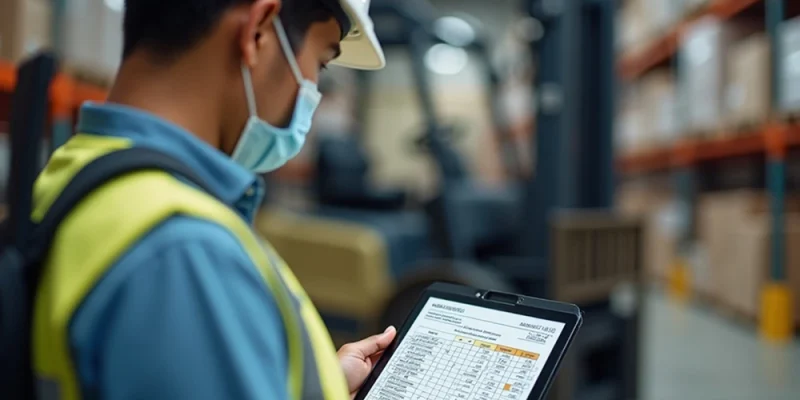
Image Recommendation: A warehouse manager reviewing a maintenance cost spreadsheet on a tablet, with a used forklift visible on the floor behind them.
What does a used forklift actually cost, five years after the purchase invoice is filed away? Not the resale price, the cumulative cost of keeping it running: every service, every replaced part, every day it sat idle waiting on a component that wasn’t readily available. That number rarely appears anywhere near the original sale price, and it’s usually the more important one.
Why the Purchase Price Is Only the Opening Figure
A lower upfront price on a used forklift can look like the better deal in isolation. Whether it actually is depends almost entirely on what happens afterwards, specifically, how easily parts for that exact make, model, and year can be sourced once something eventually needs replacing. A truck that’s cheap to buy but difficult to keep running rarely ends up being the cheaper option overall.
What Tends to Get Overlooked Before Purchase
1. Whether the specific model and year still has active parts support, or is approaching the point where sourcing becomes difficult.
2. How long a part typically takes to arrive when it’s needed, rather than just whether it’s theoretically available somewhere.
3. Whether the seller is also a parts source, or purely a one-time equipment reseller with no ongoing relationship.
Why Buying From a Supplier That Also Holds the Parts Matters
Purchasing through a forklift parts supplier that also sells the equipment itself closes a gap that a pure equipment reseller leaves open: the same relationship that sold the truck can also supply what it needs to stay running, without a buyer having to separately track down a parts source after the fact and hope the model is still well supported.
A Practical Way to Compare Two Used Trucks on More Than Price
Two used forklifts at a similar price point can carry very different ongoing costs. One useful comparison is to ask each seller directly how quickly a common wear part, say a hydraulic seal or a set of forks, could be sourced for that specific unit, and at roughly what cost. A seller who can answer that clearly and specifically is generally a better long-term bet than one who can only speak to the sale itself.
What This Looks Like When Evaluating a Specific Listing
Looking through a used forklift for sale listing, the equipment’s condition and operating hours matter, but so does a less visible factor: whether the seller behind that listing can still support the model going forward. A well-maintained truck from a supported model line is usually a safer long-term purchase than a newer-looking unit from a line that’s becoming harder to source parts for.
How This Plays Out Over a Typical Ownership Period
In the first year or two, most used forklifts run without major issues regardless of where they were bought, since recent wear hasn’t accumulated yet. The difference tends to surface in years three through seven, when the first major components start needing replacement. That’s the window where a buyer either benefits from having chosen a model and supplier with strong ongoing parts support, or starts absorbing unplanned downtime and premium pricing on hard-to-find components.
What a Realistic Budget Should Account For
1. An estimated annual parts and servicing cost, not just the depreciation schedule on the purchase price.
2. A contingency for at least one unplanned major repair somewhere in the truck’s expected remaining working life.
3. A fallback plan, even a temporary rental unit, for the downtime a parts delay could realistically cause.
Why This Calculation Changes With Fleet Size
A single used forklift supporting occasional, light-duty work can absorb an unexpected parts delay without much consequence; the job simply waits a day or two longer. A fleet of several trucks running continuous shifts doesn’t have that slack; one unit down for a hard-to-source part can bottleneck an entire operation, which makes the long-term parts-availability question considerably more important to settle before, rather than after, a fleet purchase decision is finalised.
The sticker price on a used forklift answers one question. Whether that truck stays affordable to run for the rest of its working life is a separate question entirely, and it’s usually the more expensive one to get wrong.
Working out the realistic long-term cost of a specific used unit is easier with a direct conversation than a listing alone. Contact Hyster-Yale Lift Trucks Singapore to go through the details.


Comments