
 By
In places where it rains for much of the year, keeping a car clean can feel like a losing battle. You wash it on Saturday morning, the clouds roll in on Saturday afternoon and by Monday the doors are streaked with road spray. Many drivers in wet regions eventually give up on spotless and settle for acceptable.
Protection film with a water-repellent top coat will not stop the rain, but it does change what the rain leaves behind. For daily drivers in damp climates, that change is more than cosmetic. It affects visibility of the car’s condition, how much grime builds up in seams and corners, and how much time owners spend dealing with the effects of wet weather.
What Wet Weather Does to a Car’s Finish
Rain itself is not especially harmful to modern paint. The problem is what comes with it.
Road spray carries a mixture of water, oil residue, fine grit, rubber particles and, in winter, road salt. When it dries on the paint, it leaves a dull film. Rain can also carry pollutants and dust from the air. On a surface that holds water, these residues sit and dry repeatedly.
Over time, this leads to a car that looks permanently tired, with dirt collecting in panel gaps, around badges and along the lower doors. In coastal areas, salt in the air adds another layer of exposure.
How Water-Repellent Film Changes the Picture
A surface that repels water does not allow road spray to settle as easily. Droplets bead and run off, especially at speed. As they move, they carry some of the dirt with them instead of leaving it to dry in place.
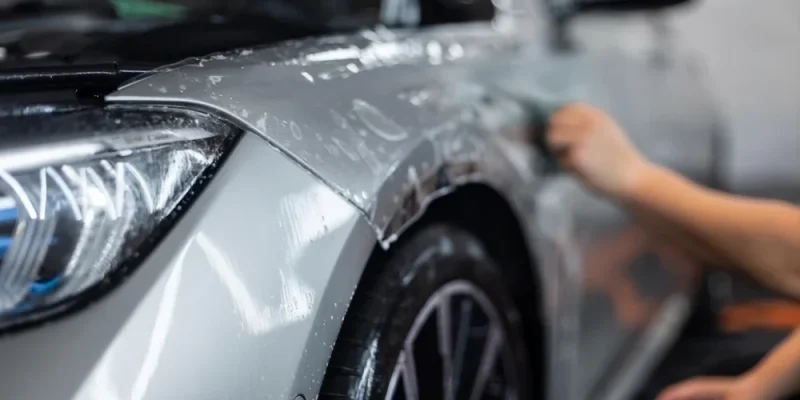
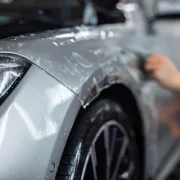
A hydrophobic ppf combines that behaviour with the physical protection of a thermoplastic polyurethane film. That means the panels it covers are shielded both from the chemical and visual effects of wet-weather grime and from impacts from grit and small stones thrown up by other vehicles on wet roads.
The result is not a car that never gets dirty, but one that tends to look cleaner for longer and returns to clean more easily.
The Daily Driver’s Perspective
Morning commutes
Cars parked outside overnight collect dew and condensation. On water-repellent panels, much of it beads and drips away, and what remains clears quickly once the car starts moving.
Motorway spray
Following lorries and other vehicles in the rain sends a constant stream of dirty water onto the front of the car. A water-repellent surface sheds more of it and keeps the bonnet and bumper from becoming coated as quickly.
Stop-start town driving
Lower speeds mean water does not blow off as easily. Even so, the reduced bonding between dirt and surface makes a quick rinse at the weekend more effective.
Protection Against Grit on Wet Roads
Wet roads often carry more loose material than dry ones. Rain washes grit from verges onto the carriageway, and tyres pick it up and throw it backwards. Small stones become projectiles for the vehicle behind.
Protection film is designed to absorb these impacts. The front bumper, bonnet leading edge, wings and mirror caps take most of the hits, and a film layer prevents many chips that would otherwise reach the paint. In winter, it also helps shield paint from salt and grit spread on roads, which can damage finishes and encourage corrosion where chips expose metal.
Coverage That Makes Sense in Wet Climates
Not every owner needs full-body coverage. A practical approach is to protect the areas that face the most weather and debris.
The front end, including bumper, bonnet, wings and mirrors, is the usual starting point. It takes the most impacts and the most road spray.
The lower doors and sills sit in the spray zone of the car’s own wheels. Covering them reduces chips and grime build-up along the sides.
The rear bumper top and boot edge benefit if the car regularly carries loads or is used for family trips with wet bags and gear.
Owners who want the most consistent appearance and the least maintenance often choose full coverage, so the entire car behaves the same way in rain.
Talking to an Installer About Wet-Weather Use
When booking, it helps to describe how and where the car is used. Mention whether it is parked outside, how often it travels on motorways, whether roads are salted in winter and whether you live near the coast. These details help the installer suggest which panels to prioritise and how edges should be wrapped to reduce water and dirt entering seams.
Ask how the film’s water-repellent layer is expected to perform over time and which cleaning products the installer recommends. A good installer will be honest about what the film can and cannot do in your conditions.
Keeping the Benefit Over Time
In rainy climates, regular gentle washing matters even more. Road film can build up on any surface, and a layer of grime can temporarily mask the water-repellent effect. A proper wash with a pH-neutral shampoo usually restores it.
Rinsing the lower panels and wheel arches more often in winter helps remove salt before it settles. Using a car dryer or blower after washing avoids leaving water to dry in seams.
Avoid strong degreasers and abrasive products on the film, as they can wear the top coat. If you use additional sprays or coatings, make sure they are compatible with the film.
What Not to Expect
Water-repellent film is a helpful tool, not a miracle. Heavy mud from rural roads will still need washing. Wheels will still collect brake dust. Windows are a separate matter entirely and benefit from their own glass treatments.
It is also worth knowing that a dirty surface can make beading look weaker. That is usually contamination, not failure. Clean the surface properly before judging performance.
Is It Worth It for Rainy Regions?
For drivers who rely on their car every day in wet conditions, the benefits accumulate quietly. Less grime clings to the paint. Fewer stone chips reach it. Washing becomes faster and more effective. The car spends more of its time looking presentable, even when the weather refuses to cooperate.
In regions where sunshine is the exception rather than the rule, those everyday improvements may matter more than anything a showroom photo can show.





Comments